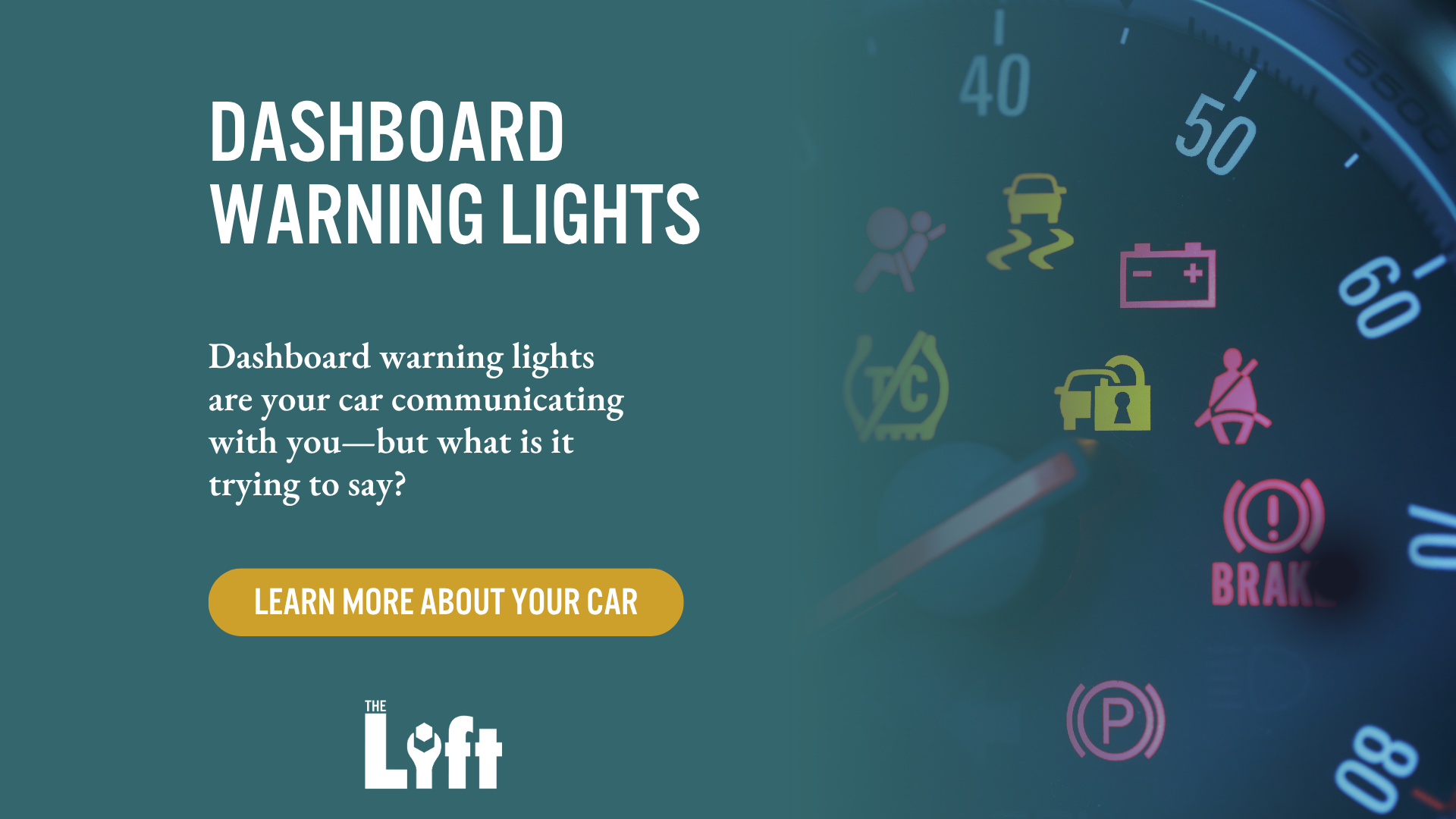
When a dashboard warning light comes on, your car is communicating to you that something is wrong. Some of these symbols are easier to understand than others and understanding what these warning lights mean helps you ensure that your car is safe and reliable. Ignoring or misunderstanding a car warning light can turn a small problem into a large issue. These issues can also often become dangerous, or expensive.
The Value of Car Care Education
At The Lift Garage, we work every day towards our goal of Safe Cars, Secure Lives. We know that losing access to a vehicle can be devastating for our neighbors, but for many, the cost of market-rate car repairs is just not feasible.
As a nonprofit auto shop, our mission is to offer our customers a vehicle out of poverty through low-cost car repair, connecting with community partners to strengthen the support networks, and linking our customers with needed resources.
At The Lift Garage, we offer free and honest advice to our customers, which includes providing educational information about your car.
We believe that providing important information about proper care and maintenance of your vehicle lifts up our customers by increasing their education about their vehicle, better equipping them to make decisions about their vehicle, and proactively address potential issues before they become more serious—and more costly.
Many car owners lack the knowledge and resources to car for their car effectively, so by providing reliable information about car care to our customers, we hope to keep more safe cars on the road and more of our neighbors able to drive to work, appointments, school, for groceries, and all of the other parts of a stable and secure life.
Understanding dashboard warning lights can help you keep your vehicle running better for longer and help keep yourself and others safe on the road. By knowing when your vehicle needs maintenance or has a critical system failure, you can respond appropriately and take action to keep your car running better for longer.
How to avoid regular dashboard warning light surprises:
Understanding your dashboard warning lights can help you understand what repairs or maintenance needs to be done, but how can you avoid them coming on in the first place?
At The Lift Garage, we are committed to helping car owners keep their cars safe and reliable, and one way to do that is through education, such as sharing the meanings of dashboard warning lights.
Keeping your car on a regular schedule of maintenance, such as regular oil changes, tire rotations, brake pad and rotor changes, can help keep your car in safe and reliable condition and reduce the likelihood that you’re surprised with a dashboard warning light.
It is also extremely valuable to find a mechanic or auto shop that you trust to provide honest advice about your vehicle.
At The Lift Garage, we provide free inspections to customers within our income eligibility guidelines. During these inspections, our experienced technicians will do a full inspection of your vehicle and note what regular maintenance needs to be performed, in addition to more significant repairs that need to be performed.
Types of Car Dashboard Symbols
To understand dashboard warning lights, it is helpful to understand the different types of dashboard warning lights that may appear in your vehicle. Different types of dashboard warning lights can give you different information about your vehicle.
At The Lift Garage, we believe that education and understanding about vehicles, including the different types of dashboard warning lights, helps car owners keep their vehicles running better for longer. We know that we’re all safer on the road when there are more safe cars alongside us. Understanding the types of dashboard warning lights can help you know which lights need immediate attention or when to stop driving your vehicle until the light has been addressed.
One of the ways to categorize dashboard warning lights is by their purpose. To understand dashboard warning lights, it is helpful to understand the different types of dashboard warning lights that may appear in your vehicle. Different types of dashboard warning lights can give you different information about your vehicle.
At The Lift Garage, we believe that education and understanding about vehicles, including the different types of dashboard warning lights, helps car owners keep their vehicles running better for longer. We know that we’re all safer on the road when there are more safe cars alongside us. Understanding the types of dashboard warning lights can help you know which lights need immediate attention or when to stop driving your vehicle until the light has been addressed.
Dashboard Warning Light Purposes
One of the ways to categorize dashboard warning lights is by their purpose. Dashboard warning lights serve a variety of purposes, including:
-
- Indicators that a system is working (such as headlights or cruise control)
- Warnings about malfunctions (like an engine issue or brake problem)
- Reminders (such as low fuel or maintenance due)
Paying close attention to your dashboard warning lights can help prevent breakdowns, improve safety, boost fuel efficiency, and extend the lifespan of your vehicle, ensuring that you have a safe and reliable vehicle to get to work, school, and anywhere else that you need to go.
Dashboard Warning Light Colors:
Dashboard warning light color also varies based on the information that the light delivering. The dashboard warning light colors may be:
Green or Blue Dashboard Warning Lights:
Green or blue dashboard warning lights usually mean that the corresponding system is working or in operation
Orange or Yellow Dashboard Warning Lights:
Orange or yellow dashboard warning lights generally tell you that your vehicle is due for maintenance to ensure the long-term safety and mechanical integrity of your car. These lights can be less urgent, but should not be ignored for too long, as skipping regular maintenance can lead to issues.
Red Dashboard Warning Lights:
Red dashboard warning lights usually indicate that you need to take urgent action in order to preserve your vehicle’s mechanical integrity and ensure your safety while driving. These lights should never be ignored.
By learning what dashboard warning lights mean, you can keep yourself and others safer on the roads by keeping your car in good working order. At The Lift Garage, we know that access to a safe and reliable vehicle is often a cornerstone to a stable and secure life, so we want to educate car owners about how to best care for their vehicles.
Dashboard Warning Light Meanings
To best ensure your personal safety while driving, and the safety of the other cars on the road with you, let’s explore some of the most common dashboard lights that you may see in your vehicle!
Check Engine Light
This dashboard warning light is often the most feared by drivers and is highly ambiguous. It can mean anything from a minor issue, such as an ill-fitting gas cap, to something much more serious.
The check engine light is usually in the shape of an engine, and it often has the words “CHECK ENGINE” in capital letters below it. It usually appears in an orange color.
Don’t panic if this dashboard warning light comes on in your vehicle, but don’t look the other way and ignore it. This dashboard warning light indicates that you should bring your car into a mechanic to run a diagnosis on your vehicle at your earliest opportunity. All cars made after 1996 are required to have an On Board Diagnostic system in place, and an auto shop will have the tools needed to check this system for the codes causing your check engine light to illuminate.

Common Causes of the Check Engine Light:
At The Lift Garage, we believe that safe cars create secure lives. By providing our customers with knowledge about their engine warning lights, like the Check Engine Light, and providing free inspections of our customers’ vehicles, we hope to help inform car owners how to make the best decisions for their vehicles. We are all safer on the road when the other vehicles around us are in safe and reliable condition.
There are many different reasons that the check engine light can come on, and the only way to know for sure what your car is trying to tell you is to bring it to a qualified mechanic who can run diagnostics on the Check Engine Light.
However, there are a few common things that can cause your check engine light to illuminate:
-
- Loose or Broken Gas Cap
- Oxygen Sensor Failure
- Catalytic Converter Issues
- Faulty Spark Plugs or Wires
- Mass Airflow Sensor Problems
Any of these issues can cause problems in your car that may cause the check engine light to illuminate. These are not the only issues that can cause the check engine light to come on, however, so it’s important that you bring your car into an automotive shop to get an inspection and full diagnosis of your vehicle.
What to do is your check engine light comes on:
The best course of action is usually to visit a mechanic, who can run diagnostics on your vehicle to discover the cause of the check engine light. Dashboard warning lights are connected to complex systems within your vehicle, so interpreting your dashboard warning lights can be tricky and is best left up to a mechanic.
Ensure that you see a trusted and experienced mechanic, like those at The Lift Garage, to receive honest advice. The Lift Garage’s mission is founded on providing free and honest advice to our customers to ensure that they have the best information possible to make decisions about their vehicle.
Brake System Light
The brake system light is one of the most crucial of your dashboard warning lights, as it indicates an issue with your car’s brake system. Brakes are an absolutely essential part of safe vehicles, and if this dashboard warning light comes on it should never be ignored. It indicates there is an issue affecting your car’s ability to stop, presenting a significant safety concern.
The brake system light most often looks like an exclamation point in a circle, with two additional curves on the outside of the left and right of the circle. It is usually red or amber in color.
At The Lift Garage, we focus our repairs on safety and drivability concerns, so brakes are a very common repair in our shop. Brakes are an essential part of safety and issues with braking are a significant concern, not only for your own safety, but for the safety of cars around you.
When we address issues with braking, we help keep everyone safer on the road by ensuring there are more safe cars alongside us. At The Lift Garage, we provide low-cost car repair to lift up our community and make our roads safer for all.

Common Causes of the Brake System Light:
By knowing the common causes of the brake system light, and other dashboard warning lights, you can make the best decision possible regarding your vehicle’s maintenance. It’s crucial to remember that brakes are an essential safety feature in your vehicle, and this warning light should not be ignored.
A few things common causes of the brake system light include:
-
- Parking Brake Engaged
- Low Brake Fluid
- Worn Brake Pads
- Faulty Brake Sensors
- Brake Master Cylinder Issues
These are not the only reasons that your brake system light may illuminate, however, and this dashboard warning light should always be taken seriously.
What to do if your brake system light comes on:
If your brake system light illuminates while you’re driving, it is essential that you pull over to a safe location and assess what may be causing the issue. Brake issues are a major safety concern for you and the vehicles around you, so be sure to address any causes of the brake system light as soon as possible.
By being informed about the meanings of dashboard warning lights, like the brake system light, can help you make the best decisions for your vehicle and ensure that regular maintenance is performed.
A few things you can do when the brake system light comes on include:
-
- Check the parking brake, as this is a simple issue to resolve on your own. Ensure that the parking brake is fully released.
-
- If you’re comfortable, check the brake fluid in your vehicle. You may be able to top off the brake fluid in your car for a short-term fix, but you should see a mechanic to address any underlying problems.
-
- Consult a mechanic, who can use specialized tools to find and address issues with your brake system to ensure your car remains safe to drive.
See a trusted and experienced mechanic. At The Lift Garage, our mechanics work to identify safety and drivability concerns on every vehicle that comes into our shop for a free inspection. By focusing on safety and drivability, we try to help our customers make the best use of their funds while keeping their car safe to drive.
Engine Oil Warning Light
The engine oil warning light is an important dashboard warning light and should not be ignored for long.
The oil of your engine acts as a lubricant and reduces the friction between the different moving parts of your engine. Without oil, the increased friction creates heat in your engine, which can be dangerous. The oil preventing friction also prevents wear and tear on the parts of your engine, as frequent friction will cause the parts to break down faster than typical.
The engine oil warning light usually looks like an oil can with a drip coming out of the spout. It is usually illuminated red.
This light is an important warning that the oil level or oil pressure in your car is no longer sufficient for circulating enough oil throughout the engine. This could ultimately lead to your engine seizing while driving, which could put you in a dangerous position.
At The Lift Garage, safety is our top priority for car repairs, and ensuring adequate engine oil stops your car from overheating—a serious safety concern. We are committed to fixing leaks, topping off oil, and ensuring that the vehicles that come to our shop are properly lubricated to prevent excess friction and overheating.
We identify safety concerns in the vehicles in our shop during our free inspections for all of our customers. By focusing on safety, we help our customers ensure that their car is safe to drive, while helping keep repairs affordable. We believe that safe cars help create secure lives for our customers and that we are all safer on the roads when low-cost car repair is available.

Common Causes of the Engine Oil Warning Light:
By understanding why the engine oil warning light is on in your car, you can better understand the steps that need to be taken to repair the issue. At The Lift Garage, we believe that by educating car owners about car maintenance, we can help them make the best choices for their vehicle. Safe cars are an important part of a secure life, and our mission is to provide low-cost car repair to keep more safe cars on the road.
A few reasons that the engine oil warning light is on include:
-
- Low Engine Oil Level
- Oil Pressure Issues
- Oil Pump Failure
- Faulty Oil Sensor
- Dirty or Old Engine Oil
What to do if the engine oil warning light illuminates:
If the engine oil warning light illuminates in your vehicle, it can be because there’s an issue causing your engine oil to leak or fail to maintain proper pressure. When there’s an issue with your engine oil, it can cause friction within your engine. Friction in your engine creates heat, increasing the risk of overheating.
Overheating presents a serious safety risk with your vehicle. At The Lift Garage, we know that a safe car can be an essential part of your life, so addressing safety issues is our top focus in our shop.
If the engine oil warning light illuminates, here are a few steps that you can take:
-
- Pull over to a safe location: Continuing to drive your vehicle with low oil or low oil pressure can cause damage to your engine, as well as overheating.
-
- Check the oil level: Use your car’s dipstick to see if the oil is low. (Be sure to wipe off your dipstick after you initially remove it and then reinsert and remove the dipstick to get an accurate look at your oil level.) You may be able to top off the oil with the correct oil type for your vehicle for a short-term fix, though a mechanic should inspect your car for underlying issues.
-
- Visit a mechanic: A skilled mechanic will be able to find and address the issues causing low oil or low oil pressure in your vehicle and ensure that it remains safe to drive.
Ensure that you visit a mechanic that you trust. At The Lift Garage, we build trust with our customers by providing thorough free inspections on each car that comes into our shop and providing our customers with an estimate including safety and drivability repairs. We focus on safety and drivability to allow our customers to make the best use of their funds while ensuring that their car is safe to drive.
Tire Pressure Light
The tire pressure light is one of the most common dashboard warning lights to appear on your dashboard, and it illuminates to alert you that one or more of your tires have low air pressure.
While this may seem like an easy dashboard light to ignore, having your tires inflated to the proper air pressure helps ensure proper traction, better fuel efficiency, a longer lifespan for your tires, and even a more comfortable ride! Poorly inflated tires can be dangerous, as reduced traction can lead to accidents.
The tire pressure light appears as an exclamation point inside of a half circle with ridges on the bottom of the circle. It often illuminates in yellow.
The Lift Garage performs tire maintenance on hundreds of cars each year. Tires are crucial to the overall safety of your vehicle, as they connect your car to the road. Ensuring that your car is safe is not only safer for you, but safer for everyone on the road. At The Lift Garage we address safety and drivability repairs during more than 1,700 appointments each year. We believe that safe cars are an essential building block to secure lives.

Common causes of the tire pressure warning light:
The tire pressure warning light can come on for a variety of reasons. While this dashboard warning light may seem like it’s not a big deal, it’s important for your tires to be inflated to the proper tire pressure to ensure good traction.
A few reasons that your tire pressure warning light could come on include:
-
- Cold Weather
- Tire Punctures or Leaks
- Under-inflated Tires
- Faulty Tire Pressure Monitoring System (TPMS)
- Uneven Tire Wear
These are just some of the reasons the tire pressure warning light could be on, and if the light stays illuminated after attempts to ensure that your tires are inflated to the proper PSI, it’s important to visit a mechanic to look for additional issues.
What to do if the tire pressure light comes on:
- Check the tire pressure: You can check the tire pressure in your vehicle with a simple gauge, and we recommend that you keep one of these gauges in your car for ease of use. The information about the proper tire pressure for each of your tires is typically listed on the inside of your driver’s door.
- Add air if needed: If your gauge shows that your tires are not inflated to the proper air pressure, use an air compressor to add air to your tires. These can be found at many gas stations or purchased for home use.
- Check for leaks or punctures: Visually inspect your tires for any embedded objects, such as nails or screws, or any visible punctures. Leaks are more challenging to spot, though you may be able to see cracks that could indicate a possible leak. Some punctures and leaks can be patched, but not all. A mechanic can provide guidance on whether your tire can be patched or if it needs replacing.
- Consult a mechanic: If your tire pressure light stays on despite proper tire inflation, you should consult a mechanic for further diagnostics and guidance. The issue may be with your Tire Pressure Monitoring System, which they will be able to assist with.
Traction Control Light
The traction control light is a dashboard warning light that comes on to indicate that the stability or traction control system is partially or fully disengaged. The traction control system is designed to prevent wheel spin when accelerating on slippery surfaces, like snow, ice, or wet roads.
The traction control light usually appears as an icon shaped as the rear view of a car with wavy lines below it. It is most often illuminated in a yellow color.
Traction control is an important safety feature in vehicles, so if this warning light is persistently illuminated, it’s important for you to take steps to address it to ensure that your vehicle is safe to drive. At The Lift Garage, we believe that safe cars help to create secure lives, so we believe that it’s essential for our customers and all car owners to understand the meanings of dashboard warning lights.

Common Causes of the Traction Control Light:
The traction control light usually comes on briefly while driving, as opposed to other engine warning lights that will come on and stay on until the issue is resolved. The traction control light is still an essential dashboard warning light, and it’s important to note when it comes on. If it comes on and stays on, it is important to have the issue addressed by a trusted mechanic.
A few things that can cause the traction control light to illuminate while you drive include:
-
- Slippery Road Conditions
- Worn-Out Tires
- Brake System Problems
- Malfunctioning Traction Control System
What to do if the traction control light comes on:
The traction control light is part of the traction control system, which is an important safety feature in your vehicle. Ensuring that your vehicle is safe to drive is a crucial part of car ownership. At The Lift Garage, we provide free inspections to all of our customers which focus on safety and drivability. Issues with the traction control system can be identified during these inspections.
If your traction control light comes on often or comes on persistently, there are a few things you can do to try to find the cause:
-
- Inspect your tires for wear or uneven tread: Visually inspect your tires for wear. A common technique to check the tread is to insert a penny into the tire tread groove, with Abraham Lincoln’s head facing down. If you can see the top of Lincoln’s head, the tread on your tires is too worn. In this case, your tires should be replaced to ensure proper traction and safe vehicle operation.
-
- Test your brakes: If brake problems are causing the traction control light to come on, there will likely be other signs, such as reduced braking efficiency or squeaking while braking. These issues should be addressed by a mechanic, as braking is a key aspect of overall car safety.
-
- Run diagnostics with a mechanic: If the traction control light remains on despite working brakes and acceptable tire tread, consult your mechanic for a diagnostic test, as the issue may be with the entire traction control system. They will be able to provide guidance on the next steps.
The safety features of your car, like the traction control system, are there to keep you safe, as well as others on the road. Ensuring that these systems are functioning properly is a crucial part of car ownership.
Coolant Level Warning Light
The coolant level warning light is an important engine warning light in your vehicle, as it indicates that your coolant level is below the recommended amount, which can lead to overheating if left unaddressed.
The coolant level warning light appears as a thermometer with a wavy line underneath it. The light usually lights up red.
Coolant, also called antifreeze, regulates the temperature of your engine by absorbing excess heat to prevent overheating, and by preventing freezing in the winter. Coolant also lubricates moving parts that it comes into contact with inside your engine.
Your engine creates a lot of heat while it generates the energy to move your car, so without coolant, your engine can wear down or even melt, creating a huge amount of damage in your vehicle.
Overheating presents a serious safety concern for your vehicle. At The Lift Garage, we’re committed to getting more safe cars back on the road, and we know that we’re all safer on the road when the cars alongside us are in good condition. We address concerns like coolant level warning lights and overheating through our free inspections for our customers and low-cost car repair. We know that access to safe and reliable transportation is often the cornerstone to a secure life.

Common Causes of the Coolant Level Warning Light:
This dashboard warning light comes on to warn you that your coolant level is below the acceptable amount. Low coolant in your vehicle can cause overheating, which can quickly become a serious issue.
A few reasons that your coolant level warning light could come on include:
-
- Low Coolant
- Coolant Evaporation Issues
- Coolant Degradation
- Radiator Cap Issues
- Clogged Radiator
Addressing the coolant level warning light is important to ensure the safety of your vehicle. If your car overheats, it can cause serious, lasting damage to your engine. It can also result in your car breaking down. Repairing your engine from damage caused by overheating is often very costly.
At The Lift Garage, we believe that car care education is crucial to avoiding costly repair bills. By better understanding how your car works, including the meanings of dashboard warning lights like the coolant level warning light, you can make smarter decisions about your car’s care and maintenance. Safe, reliable vehicles can be an essential part of daily living, and we strive to help get more safe cars on the road.
What to do when the coolant level warning light comes on:
Your coolant level warning light comes on to indicate that your coolant level has dropped below a safe threshold. This light should not be ignored, as low coolant levels can lead to serious issues including overheating.
-
- Pull over to a safe location: Pull over and allow your engine to cool. Wait 30 minutes before opening the hood of your car. Do not open a hot radiator cap—the coolant underneath can be extremely hot and under pressure, so opening the radiator cap can cause burns.
-
- Check coolant levels: This engine warning light often comes on because your car is low on coolant, so once the engine is completely cool you should check the coolant reservoir. Adding coolant to your vehicle can be a short-term fix that buys you time for a permanent fix from visiting a mechanic.
-
- Inspect your vehicle for leaks: Check around your radiator, hoses, and water pump for visible signs of leaking. Any leaks that you find should be fixed quickly, as you will continue to lose coolant and be in danger of your engine overheating until they are repaired.
-
- Visit a mechanic: To have issues with your coolant levels addressed, it is best to visit a mechanic, who can find the source of the problem and give guidance on the next best steps.
Be sure to visit a trusted mechanic to have this dashboard warning light addressed. At The Lift Garage, our mission is founded on offering free and honest advice to our customers so they can use that information to make the best decision for themselves and their cars.
Airbag Warning Light
The airbag warning light is an essential dashboard warning light that comes on to indicate an issue with your vehicle’s airbags. Airbags are a crucial safety feature, that protect the occupants of a vehicle during a collision. Airbags deploy within milliseconds to provide a cushion between vehicle occupants and hard surfaces. The airbag warning light should never be ignored, as any issue with the airbags in your vehicle presents a significant danger to the driver and passengers.
The airbag warning light appears as a side view of a person seated in a car with an airbag inflated in front of them. It usually illuminates in a red color.
At The Lift Garage, safety is our top priority for our customers, so we provide our customers with free and honest advice, as well as car care education. Every customer in our shop receives a free inspection, during which we identify all safety and drivability concerns with the vehicle, and offer free advice and next steps to address the problems.

Common causes of the airbag warning light:
The airbag warning light comes on to indicate an issue with your vehicle’s airbags, and this dashboard warning light should never be ignored. Any issue with your airbag presents a serious safety concern. You never want to be in an accident, but if you are, it’s essential that your airbags are functioning properly to keep you as safe as possible.
The airbag warning light may come on in your vehicle for reasons including:
-
- Deployed or faulty airbag
- Loose or damaged wiring
- Faulty airbag sensors
- Seat belt issues
- Airbag control module issues
These are not the only reasons that the airbag warning light could come on, and if this light appears on your dashboard, it is essential that you bring your car to a mechanic to have the issue identified and addressed by a professional.
What to do when the airbag warning light comes on:
The airbag warning light should never be ignored, as the airbags are a crucial safety feature in your car.
If the airbag warning lights comes on:
-
- Consult a mechanic: The airbag system is extremely sensitive, and diagnosing and addressing the issue can require specialized equipment. If you airbag warning light comes on, bring your vehicle to a certified mechanic. They can perform a scan on the vehicle and provide guidance on repairs.
-
- Never delay repairs: If your airbag warning light comes on, do not wait to have the problem addressed. In case of an accident, airbags can be lifesaving, and it is crucial that they are always in good working order.
At The Lift Garage, the safety of our customers is our top priority, however, due to the highly sensitive nature of airbag sensors and specialized nature of airbag repairs and service, we do not perform work on airbags.
Battery Light
The battery light is a dashboard warning light that indicates that there is an issue with your vehicle’s battery, alternator, or electrical connections.
The battery in your car works with the alternator to power the electrical system in your car. The battery stores power for your car and starts your car’s engine. Once your car is running, the alternator converts the mechanical energy created by the engine into electrical energy to power the electric parts of the car.
This dashboard warning light may seem like a small problem initially, but ignoring the light can lead to a dead battery, so your car won’t start, and potentially damage to the electrical systems in your car.
The battery light usually appears as a rectangular battery with a plus sign on the right and a minus sign on the left. It usually illuminates red.
The Lift Garage often addresses issues related to the battery and alternator. We diagnose these issues during our free inspections on every car that comes into our shop. Bad batteries and alternators are also the frequent subject of visits from our mobile van, which visits cars that would otherwise need to be towed into our shop. The mobile van does a pre-inspection to ensure that the issue is something that we can fix, so that the vehicle isn’t towed into our shop if we can’t fix the problem.

Common causes of the battery light:
The battery light illuminates on your dashboard to indicate an issue with your car’s battery, alternator, or electrical connections. If ignored too long, this light can lead to a dead battery, making it so your car won’t start, and potentially damage the electrical system in your car.
There are a few things that can cause the battery light to come on, including:
-
- Battery issues
- Loose or corroded battery connections
- Failing alternator
- Damage to the serpentine belt
These are not the only causes of the battery light however, and this dashboard warning light should be addressed promptly to ensure that your car remains safe and reliable.
At The Lift Garage, we believe that safe and reliable vehicles can be the cornerstone to a secure life. We provide low-cost car repair to help our customers maintain their daily lives, like getting to work, bringing kids to school, attending appointments, getting groceries, and more.
What to do when your battery light comes on:
When your battery light comes on, your car is communicating that there is an issue with the battery, alternator, or electrical systems. While this light may not require you to stop driving immediately out of safety concerns, it should not be ignored for long.
When your battery light comes on, there are a few steps you can take:
-
- If driving, turn off inessential electrical systems, such as the radio, air conditioning, or heated seats. This will reduce the load on your battery and electrical systems and can help preserve the power in your battery.
-
- Check the connections to the battery: If you’re comfortable and able to check the connections to your battery, look for loose or corroded connections.
-
- Consult a mechanic: If the battery light remains on or your car shows signs of electrical failure, be sure to visit a mechanic to test your battery. Signs of electrical failure in your car include dimming lights, slow or unresponsive power windows/locks, burning smells from electrical components, and more. A mechanic can diagnose the issue and provide guidance on how to address it.
The battery light can often be fixed with a new battery, but more complex issues can require more advanced diagnostics and repairs. Visiting a trusted mechanic can help you determine the best path forward.
Transmission Temperature Warning Light
The transmission temperature warning light is a dashboard warning light that comes on when transmission of your vehicle is overheating. The transmission is a critical component that transfers power from your engine to the wheels of your car, allowing the vehicle to move efficiently and change speeds. The transmission can be either automatic or manual. Manual transmissions are often referred to as “stick shifts.” Manual transmissions use a clutch pedal and shifter to engage or disengage the engine from the transmission. Automatic transmissions use a torque converter to change gears.
The transmission temperature warning light is usually in the shape of a thermometer surrounded by a gear. It is usually lit up yellow.
The transmission is one of the most expensive parts of your vehicle, so it is essential to address any issues with the transmission right away. At The Lift Garage, we provide low-cost car repair to Minnesotans, as we know that a safe and reliable vehicle is a crucial part of a secure life.

Common causes of the transmission temperature warning light:
The transmission temperature warning light comes on to indicate that your transmission is overheating, but that overheating can be caused by a few different factors. Your car’s transmission is an essential part of your car’s operation, and can be very expensive to repair and replace.
A few things that can cause the transmission temperature warning light to come on include:
-
- Low transmission fluid
- Old or contaminated transmission fluid
- Driving with or towing heavy loads
- Cooling system failures
- Faulty transmission cooler
Addressing any issues related to your transmission quickly can help prevent a costly repair. At The Lift Garage, we know that the cost of car repair can be prohibitively expensive for many car owners. We provide low-cost car repair services to Minnesotans to help keep more safe cars on the road, keeping us all safer. The Lift Garage, however, does not work on transmissions and will refer our customers to a transmission specialist for needed repairs.
What to do if the transmission temperature light comes on:
If your transmission temperature light comes on, it is essential that you address the issue promptly. If the problem goes unaddressed, it can lead to costly repairs.
There are a few steps you can take if your transmission temperature warning light comes on:
-
- Pull over your car and allow the transmission to cool. Continuing to drive while your transmission is overheated can cause significant damage.
- If you’re comfortable, check the transmission fluid level after allowing the transmission to cool. You may be able to top off low transmission fluid. Be sure to consult your owner’s manual to get the right kind.
- Reduce the load on your vehicle. If you’ve been towing a heavy load, or carrying a heavy load in your vehicle, stop towing or reduce the weight to take strain off of the transmission. Allow the transmission to cool before getting back on the road.
- Visit a mechanic. If the transmission temperature warning light stays on, visit a mechanic to diagnose the issue. They will be able to find any deeper issues and advise on the next steps.
Transmissions are often costly repairs. While The Lift Garage can determine if there is an issue with your transmission, we do not work on transmissions in our shop and will refer our customers to a transmission specialist for needed repairs.